

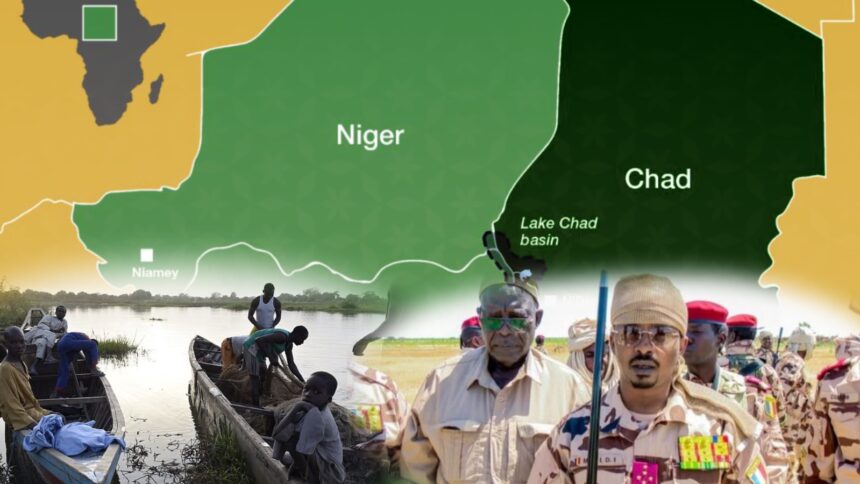
In September 2025, Chad and Cameroon signed a strategic defense partnership agreement in the Cameroonian capital, Yaounde, to enhance security on the common border, focusing on combating terrorism and organized crime, through joint operations that include information exchange and military training, which constitutes an important step to ensure regional stability and secure the population.
The step came in light of the escalation of the threat of armed terrorist and criminal organizations, and the suffering of local communities from the phenomenon of kidnapping for ransom, and the spread of theft. The two countries had previously had prior cooperation, and therefore there is experience in this field. Despite the effectiveness of the approach used in confronting this type of security threat, the dilemma of using a “non-kinetic” and interactive approach with local communities continues. The affected communities often view military operations as useless and threatening their safety, which complicates the matter further. With the relations of security and military institutions and their connection with former colonial powers, and on the other hand, the use of soft power can open reliable channels of communication between local communities and security forces, provided that these forces can enhance awareness-raising among local communities and increase their ability to withstand. This report discusses the feasibility and challenges of the agreement signed in September.
Mutual Defense Agreements (Concept and Importance)
This type of agreement is a strategic tool for enhancing collective security, deterring threats and consolidating political and military alliances between countries. These agreements are based on adopting the concept of collective security, and their importance lies in providing a collective protection umbrella, exchanging experiences and building capabilities, sharing material burdens and enhancing deterrence against common security threats. These agreements oblige member states to defend each other in the event of any external threats or attack. They are also considered a diplomatic means between countries and transform political cooperation into military cooperation, thus forming a common front. Uniform.
At the operational level, the agreements facilitate rapid, coordinated intervention in emergencies and conflicts. Finally, the agreements provide a legal framework and legal and diplomatic cover in the event of actual intervention and implementation of military operations that could have an impact on the theater of operations with regard to the (humanitarian dimension).
The September 23 agreement identifies the need for joint border operations and training, enhanced cooperation, and improved information exchange.
The partnership aims to coordinate efforts to combat terrorism and confront land-related conflicts (farmers and herders). The agreement is characterized by several strengths, including the experience gained from previous cooperation with the Multinational Joint Task Force (MJTF), and providing a platform for pooling resources.
On the other hand, simply signing the agreements without activating them cannot be in the interest of the partners. What can be achieved without confronting the threats that surround them? Therefore, one of the most important challenges that these agreements can face is (lack of actual implementation of their content, either due to differences in the interests of the partners themselves, or reliance on one party for financing and implementation), which ultimately leads to weakening the collective effort, and thus confusing the security scene, in the interest of the common adversary.
Why are Chad and Cameroon seeking to sign the agreement?
In fact, the countries of the Lake Chad Basin, especially the border region of Chad and Cameroon, suffer from several security threats, such as the spread of Boko Haram factions, criminal groups, and banditry organizations. These threats used “kidnapping for ransom” and smuggling tactics (weapons, people, drugs), and thus this situation imposed the inevitability of cooperation between the two countries. Despite the presence of the “multinational joint force,” the group suffered from challenges that seemed to affect its effectiveness and continuity. Therefore, this position strengthened the states of “Chad” and “Cameroon” bilateral security and defense cooperation.
Based on previous experience, which included the participation of many parties from the “Lake Chad” countries in the multinational joint force, it can be said that the challenges that were behind the weakening of the sub-regional grouping of the “Lake Chad” countries in the MJTF, as the countries of the “Lake Chad Basin” had hesitated to take this step, and had previously been content with a security alliance to confront criminal armed gangs since the nineties, specifically 1994, which is an outdated grouping. It was also disproportionate to the size of the terrorist threat after the spread of the threat of the “Jamaat Ahl al-Sunnah for Preaching and Jihad (JAS)” and its regional spread, and even its declaration of the caliphate in 2014. The group’s attacks on the countries of Cameroon, Niger and Chad also escalated, which stirred the stagnant waters and prompted “Yaoundé” to hold conferences to implement and activate a joint multinational military force. Indeed, the force has been formed since 2015, and there is now a proportionate structure to confront the threat of terrorism in Lake Chad, although it continues for the present time, there are problems
In any case, issues such as financing, different priorities for partners, weak logistical supply, training challenges, and changing the leadership structure are all restrictions that have limited the effectiveness of this force. In addition, the withdrawal of some members, such as Niger’s withdrawal from it, has hindered the effectiveness of the force. This reason may have formed a pressure factor on the countries of Chad and Cameroon to sign such an agreement, regardless of the geographical nature and the growing threat of criminal gangs, banditry and smuggling, and the spread of the phenomenon of kidnapping. In exchange for ransom, which has spread as a tactic used by terrorist groups and thieves and criminal gangs in this region, especially since the two countries share a border area of up to 1,000 kilometers, a situation that requires developing security and intelligence cooperation to monitor movement along the border, and strengthening capabilities in confronting this type of non-traditional threats.
The human dimension and soft power in the face of common threats
In fact, spreading instability is disrupting fishing, agriculture, trade and supply chains, resulting in the closure of markets such as the cattle market in Banki in northeastern Nigeria. Youth unemployment rates in the far north of Cameroon reach 75%, a situation that encourages young people to join violent extremist groups. On the Chadian side, the Islamic State in West Africa (ISWP) is actively involved in terrorist activities and other cross-border crimes.
In fact, local communities suffer from the effects of “state fragility,” which means a decline in the provision of basic services, such as education, health, and security, and the spread of gray spaces that are not subject to state rule. In contrast, African countries rush to use the military option to suppress internal rebellion or eliminate non-traditional threats, regardless of the use of dialogue and diplomacy methods, in order to consider that any rebellion (jihadist, criminal, armed) aims to get rid of the existing government. This situation results in the allocation of economic resources to carry out military operations that eat away at the share of development. These areas and communities reinforce the feeling of marginalization and increase the pressure on these communities that are already deprived of development, a situation that ultimately benefits gangs, armed and terrorist organizations.
The feasibility of using soft power
On the other hand, communicating with local communities and building trust between states and these communities is the focal point in operations to combat non-traditional threats. Naturally, both the state and its adversary (terrorist groups, criminal gangs) seek to gain the trust of local communities as a source of funding, recruitment, and support. Carrots and sticks can be used for those communities in the context of containing them (the ability to influence through persuasion and attraction, rather than using force, intimidation, or financial incentives). In the cases of Chad and Cameroon, the state must By cooperating with these communities, to improve the ability to collect intelligence information, and then thwart operations before they are carried out, detect the movements of criminal gangs, and undermine the adversary’s operational capacity,
Finally, involving local communities contributes to building their confidence, which increases the likelihood of the success of the joint military agreement. This approach also reduces operational costs and human losses, as the exchange of intelligence information allows for more precise military operations, reducing collateral damage. Intelligence-based precision strikes also reduce spending on firepower, thereby relieving budget pressures. Therefore, to achieve success in operations to confront asymmetric threats, it is necessary to involve affected communities from the early stages of planning. This soft power approach is a vital complement to the hard power approach of implementing security and military operations.