

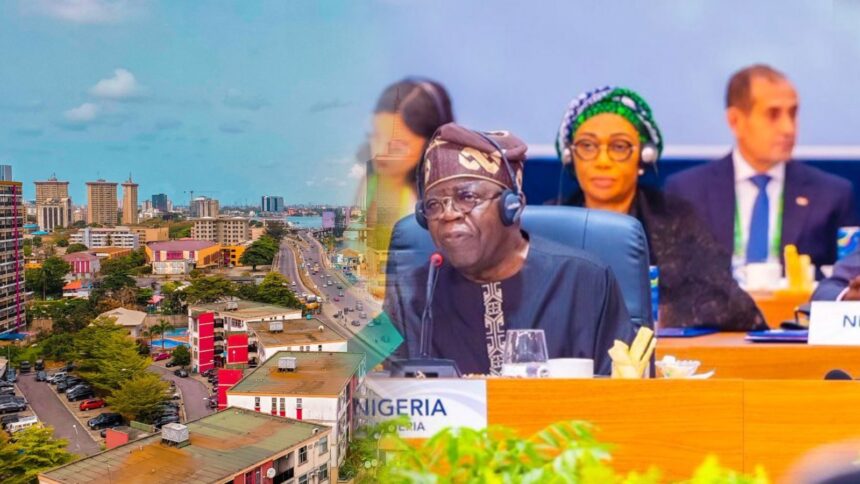
Nigerian President Bola Tinubu has confirmed that the year 2026 will represent a new phase of strong economic growth for his country, noting that the economic reforms implemented during the year 2025 have clearly begun to bear fruit despite the global economic challenges.
In a New Year address to the Nigerian people, Tinubu said that his government succeeded in maintaining the momentum of major reforms and achieving tangible economic progress, pointing out that the current indicators reflect a positive path towards a more resilient, sustainable and inclusive economy.
He explained that the Nigerian economy recorded strong growth during the year 2025, expecting the annual growth rate to exceed 4%, with the achievement of trade surpluses and remarkable stability in the exchange rate, in addition to a decline in inflation rates to less than 15%, in line with government objectives.
The Nigerian President pointed to the strong performance of the stock market, which recorded a growth of 48.12% during the year 2025, driven by an increase in the confidence of local and foreign investors, stressing that foreign reserves amounted to $45.4 billion until the end of December 2025, which provides strong support for the national economy.
Regarding foreign investment, Tinubu explained that the flow of foreign direct investment witnessed a significant increase to reach $720 million in the third quarter of 2025, compared to $90 million in the previous quarter, which reflects a clear improvement in investor confidence supported by positive reports issued by global credit rating agencies.
The President stressed that the year 2026 will be pivotal in implementing tax reforms aimed at building a fair and competitive financial system and enhancing government revenues in a sustainable manner, in addition to supporting spending on infrastructure and human capital development.
Tinubu stressed that his government is continuing to address the challenges of multiple taxes, praising the states that have adopted coordinated policies to ease the burdens on citizens and stimulate economic activity, stressing that unity of purpose and financial discipline will lead Nigeria to a more stable and prosperous future.