

Article: Abdullah Al-Abadi, a journalist writer specializing in Arab and African affairs
ازدواجية معايير تعامل الاتحاد الإفريقي مع كيانات الانفصال، تهدد سيادة الدول وتفاقم النزاعات الإقليمية المفتعلة وتهدد السلم الاجتماعي بالقارة.
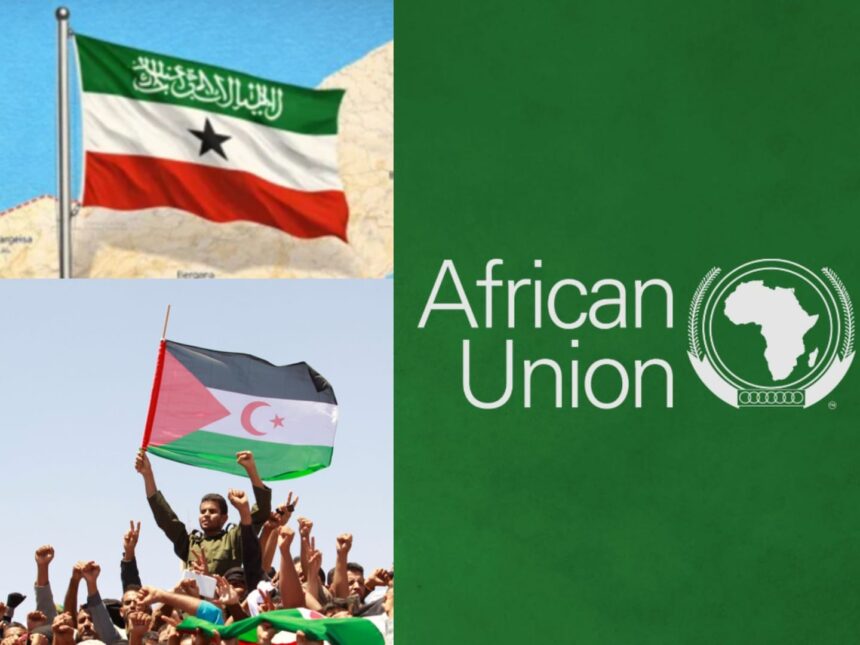
The African Union's rejection of Israel's recognition of the secession of Somaliland confirms the organization's adherence to the principle of the unity and sovereignty of member states, which is what the Chairman of the African Union Commission adheres to, who said that any recognition of separatist entities within a member country constitutes a direct threat to the stability of the continent, and opens the door to dangerous precedents that may be exploited in other regions of Africa.
However, this decision places the Continental Union in the face of historical political embarrassment and a terrible moral dilemma, when it accepts the existence of a secessionist entity that is not recognized internationally, such as the Polisario, which prompts many observers to accuse the African Union of double standards in dealing with the continent’s issues, as the Union defends the unity of some countries while supporting the presence of another secessionist entity that threatens social peace in other countries.
With the emergence of new separatist movements in Africa, the African Organization found itself facing a difficult test: either accepting the new secessionist movements or correcting a historical political mistake and expelling the Polisario from the Union, so that the Union does not find itself unable to play a consensual role in resolving continental crises.
The African Union’s renewal of its adherence to the territorial integrity of member states and its rejection of Israel’s recognition of Somaliland is not consistent with the policy of accepting Polisario into the union’s structures, which reflects a policy of double standards regarding the principles on which it is based.
Which makes it clear that the African Organization did not deal with the issue of the southern Moroccan provinces as a test related to the integrity of Moroccan territories, but rather drifted behind supporting a separatist project, despite the threat it poses to chaos and instability in North Africa and the Sahel region.
The Union’s contradiction reflects its selective dealing with the principles of international law, and confirms its historical mistake. In light of the aggravation of disputes and conflicts, the legal responsibility of the African Union requires that it play its effective role in resolving regional disputes through the mechanisms provided by its charter and its bodies, to impose peace, reject coups, prevent foreign interventions, and prevent the formation of any separatist militias, which enhances peaceful solutions and stability of the countries of the continent and ensures a better future for its people.
The multiplicity of hotbeds of tension on the continent raises several fundamental questions about the effectiveness of the African Union’s Peace and Security Council and the extent of its ability to resolve these conflicts, such as the war in Sudan and the tension in Mali, Somalia, and other African regions.
The Union’s rejection of Israel’s decision, under the pretext of protecting the territorial integrity of member states, places it before legal accountability, when it comes to other separatist entities, about when and where does the Union consider the sovereignty of member states to be a red line that cannot be compromised?
The Union’s defense of the unity of a state in the name of the Charter itself, and its support for the division of other countries, brings it into contradictions that raise problems about the legal authority for the organization’s management mechanisms, which we have repeatedly called for a radical review of its organs and structures, to restore its effectiveness in confronting the growing conflicts and threats on the continent, in the midst of new geopolitical conflicts, and to direct its work towards building a common continental future based on overcoming the mistakes of the past and serving the future of all African peoples, without exception.