

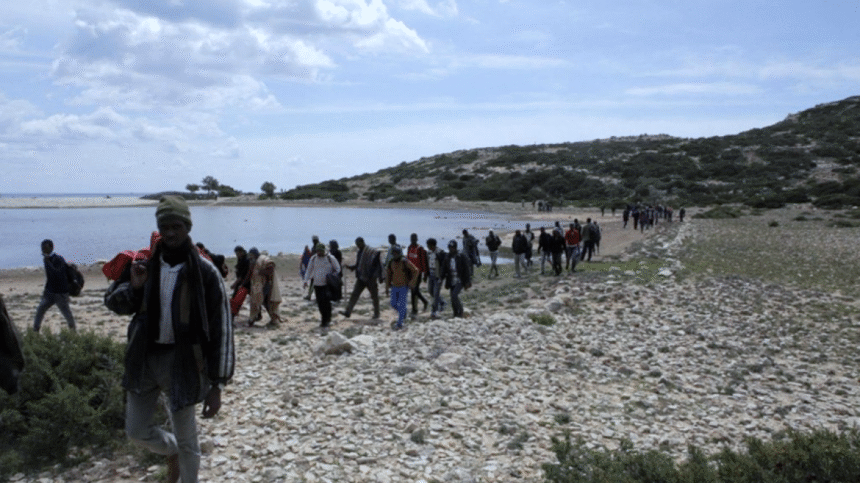
Irregular migration remains one of the main issues on the European Union's agenda, despite a significant decline in the numbers of arrivals over the past year. Data published by the European Border and Coast Guard Agency (Frontex) in December showed a decrease in irregular entry cases into EU countries by 25% during the first eleven months of 2025, to reach about 166,900 cases.
According to Frontex, the Central Mediterranean route remains the most active, accounting for nearly 40% of total irregular crossings, with Libya remaining the main departure point. However, the Libya-Crete route witnessed a significant jump, registering a 260% rise during the same period, while flows towards Italy remained relatively stable compared to the previous year.
This increase coincided with the escalation of diplomatic tensions between Greece and the authorities in eastern Libya, against the backdrop of disputes related to the demarcation of maritime borders in the eastern Mediterranean, which raised European fears of exploiting the migration issue as a political pressure card.
In the same context, media reports revealed the possible involvement of Belarus in facilitating the movement of migrants to eastern Libya, amid growing rapprochement between Benghazi and Minsk, and Russian support for the Libyan National Army. Despite Frontex’s warnings about the possibility of using migration as a tool within what is known as a hybrid war against the European Union, the agency stressed that the absence of public evidence calls for caution, in light of the complexities of the internal Libyan scene and the role of smuggling networks and militias in managing this activity.