

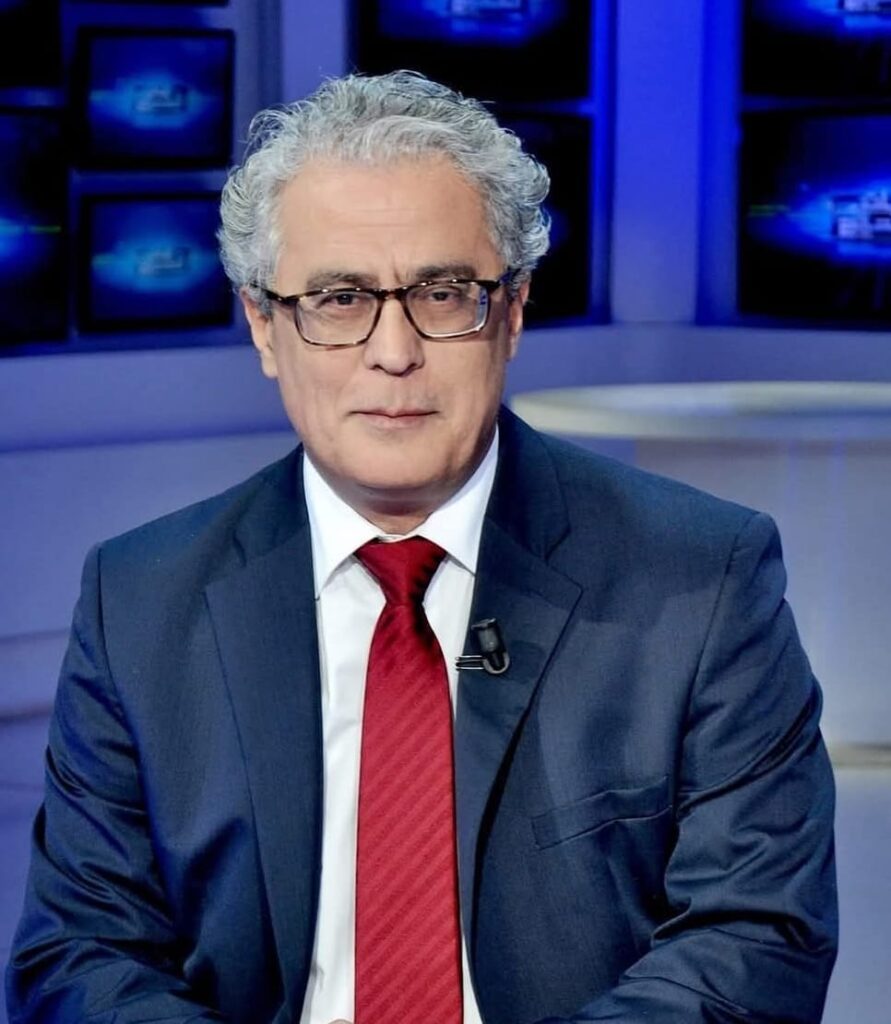
Munther Thabet, writer and political analyst - Tunisia
No one disagrees that American foreign policy has witnessed a radical transformation since Trump assumed the presidency, and although the president’s personality is controversial, Trump confirmed in a short period of time that he is governed by a self-centered tendency full of narcissism, an unspecified element of the policies of the American empire governed by research circles and strategic planning laboratories, but it has a significant influence. The military operation to kidnap Maduro from his bed in Caracas was not an operation separate from American military history, as the special forces operation in Panama on January 3 1990 It seems that history's chapters are coming together, and the present is nothing but a glimpse into the pages of the past.
The reactions of the international press in the wake of the Caracas operation are nothing but an echo of what was written during the 1970s about the rogue state. American intelligence special operations and the military intervention of special forces are not a new matter. The United States of America has made its military and security arm an effective tool in its foreign policy since World War II.
Wilson's plan to fill the void in the Middle East relied on direct military presence through the military bases established in the region in addition to NATO bases. It is noted in this regard that most of the American military bases in the world were concentrated after World War II, and that the most important bases are located in the Gulf region, Europe, and Africa, in addition to Asia.
If the bases in Europe are the product of the division of the world between the two camps, the socialist (Varsova Pact) and the capitalist (NATO), then most of the other bases are located in sensitive areas related to energy and international trade and were concentrated during the Cold War.
Available data confirm that the number of bases in Rawah Bim is 800 and 750, according to some sources, and that the United States of America undisputedly represents the first military power in the world, not only counting the nuclear arsenal, but also the number of classic weapons (....). Donald Trump invests military power in foreign policies and is satisfied directly.
Three lobbies:
The arms lobby - the oil lobby - the Zionist lobby
The construction lobby and studies offices are winning. There is a trend encountered in Trump’s policies that activates the Munroe theory, to return Latin America to the function of the backyard of the White House, gain African space, and block the path to the Chinese-Russian sweep of the continent. Trump’s policies are not as chaotic and disorganized as some believe. In the non-stereotyping of the discourse and the protocol style, it is possible to imagine “crude for politics and international relations.”
The rule is primitive and unquestionable: “He who pays more has more rights than others.” In this sense, the United States of America, through Trump, is reviewing the rule of international relations according to the principle of entitlement.
In the United Nations, it contributes approximately 22% to the organization’s budget, and 26% to the budget for peacekeeping operations, according to figures for the year 2025, at least.
The second rule: reviewing one of the pillars of strategic alliances by imposing a protection condition in exchange for Trump and rearranging the cards. It is clear that Donald Trump's second term in the White House will not be routine in American political life, that the approach of departing from the norms of the political system will continue, and that traditions will not find the usual consideration among the resident of the White House. Trump did not hesitate to pose European leaders, during a meeting at the White House, as students appearing in the hands of a professor who interrogates them.
No president has done this before, just as the rules of protocol seem to be hanging in the balance in the White House. Indeed, Trump states in every intervention that he is not concerned with respecting the sovereignty of countries or even considering their leaders. But what is strange about the reactions of Western public opinion and elites is precisely the hypocrisy with which they dealt with the military operation in Caracas, as some were upset by the showy aspect of the operation. The frankness of the operation paints it with the color of scandal in relation to the violation of the sovereignty of a member state of the United Nations, and it is most appropriate for special operations to be carried out under the guise of secrecy in order to preserve the Western values that it enshrines.
The United Nations Charter, as was the case with the coup against the legitimate government of the socialist Salvatore Al-Nada in Chile in 1973 (Jean-Michel Abate’s approach on French channels), Trump’s policies were not this violent and arrogant, as he provided political and military cover without taking into account the Israeli military aggression on Gaza. Israel’s security is sacred, and the American administration considers the issue part of American national security.
If the official American positions appear to be a confirmation of absolute support from the United States for Israel, then the issue for Trump is different. The presence of Israel, with its expansionist and aggressive policies, is a given that the American administration exploits, to market weapons and renew energy investment contracts. In fact, the general approach of the Republican American administration under Trump goes beyond the “Munroe Doctrine.” The United States is not satisfied with the American geography north and south, but rather goes beyond it to distant directions and spaces, from Africa, where the military intervention against ISIS in Nigeria, to Iran, where Trump is harassing the Iranian regime, after striking it after the military operations of the summer of 2025, all the way to putting pressure on the European Union, openly seeking to weaken it, and declaring his intention to annex Greenland to the sphere of American sovereignty, in order to demand the precious terrestrial resources hoarded during the season of major reviews.
The January 3 operation in Caracas renews a basic axiom, which is that war is a direct extension of the economy, and this is a fact confirmed by imperialist wars and forms of regional conflicts in ancient and contemporary history.
The logic of events confirms that the approach of war and violence, from the war on Gaza to the lightning strikes on Iran, all the way to the military operation in Nigeria, puts the United States of America on the path of decisive global hegemony in the conflict with China. Indeed, the direct results of the Venezuela operation confirm the premises of our statement in at least two areas.
The leftist Colombian president, descended from the armed communist organizations, after speech festivals, contacted Trump, and lifted all precautions, to arrange a meeting in Washington, in order to resolve the crisis in relations between the two countries, after the American escalation and the accusation of “Bovota” of producing and leaking white poison to the United States of America. Trump asserts that the principle of equality of sovereignty between countries is fraudulent and unjust.
The United States of America does not have the right to fund organizations, affiliated with or independent of the United Nations, if they are contrary to American interests, which is what was already decided on January 8, by announcing the United States’ withdrawal from 66 international organizations, in accordance with Executive Order 14199.
The Caracas process did not bring down the regime in Venezuela, but it paved the way for a remediation and negotiation process that enabled American oil companies to invest an estimated $100 billion in the oil infrastructure in Venezuela.
Fundamental revisions to American policy eliminate the idea that world leadership has a price that the United States must bear. Only effective leadership is profitable leadership.
Controlling oil sources for the United States of America enables it to ensure the continuation of the dollar system on the one hand, prevent trading in alternative currencies, and control the oil and gas market, thus controlling the growth rate of competing economies.
If Trump's policies regarding immigration and the issue of sexual minorities bring back to the fore memories of the American right, which is the most extreme, racist, and most cruel in its colonial tendencies, then the obsession with Chinese superiority constitutes the main trigger for his exposed imperial tendencies.
Globalization was not suitable for the United States of America. Rather, the loss of jobs due to the migration of institutions and the intensification of competition for the American market of low-cost goods exacerbated the crisis of an economy facing the highest levels of debt in the world.
Trump dropped the requirement of democracy in his foreign relations, and even declared war on the Democratic Party networks and their affiliated organizations. It also enabled regimes that lack legitimacy, according to the democratic classification, to play pivotal regional roles, as the data confirm that China has benefited exceptionally from the standards of democracy and human rights imposed by the perceptions of democrats, and has swept vital regions in the world, including Africa, the “Belt and Road” initiative, which represents the general framework for Chinese investment in infrastructure, and owning important percentages in the capital of the companies that own these structures (ports, oil wells, and railways).
Chinese penetration is distributed between West, East and South Africa, and if China’s presence in North Africa is limited, almost limited to Morocco, in some infrastructure-related projects, the flexibility of the Chinese partner predisposes it to further expansion throughout the region in the coming days.
Trump is adopting a policy of pressure and blackmail to contain unruly countries such as Venezuela, Colombia, and even Cuba and Iran. The bet is not about overthrowing the regime and replacing it with an ideal democracy and a transparent governance system, as much as it is about domesticating these regimes and dragging them into the American camp at the lowest costs, without compromising their system of government. What is important is compliance and alignment.
In this context, French President Emmanuel Macron’s talk about the democratic transition in Venezuela appeared to be steeped in naivety, and Trump did not hesitate to marginalize the potential role of the Venezuelan opposition, 2025 Nobel Peace Prize laureate Maria Corina Machado, as being disrespected in her country, and therefore the US administration recognized the Venezuelan Vice President as an interlocutor in a transitional phase under Washington’s tutelage.
Most analysts ignore that the war policies pursued by Trump are rooted in the traditions of the Republican Party, as a right-wing conservative party in its basic identity, and all military interventions abroad took place under the Republican administration, with the exception of the intervention in Haiti, under the administration of Bill Clinton, which was placed under the title of “Restoring Democracy,” or “Restoring Hope” in Somalia.
The Republican Party was the faithful guardian of the principle of besieging communism. The researcher in international relations faces the difficulty of classifying the foreign policies of the Trump administration, as it is difficult to reduce them to a single reference model. It is necessary to resort to the dictionary of American politics for the Cold War, to understand the imperial nature of the current moment. The symbolism of renaming the Pentagon in September 2025 as the Ministry of War is not a free or marginal matter. The spirit of conquest and redressing the delay resulting from the fluidity of the Democrats’ policies is an urgent necessity that cannot tolerate further deportation.
Trump destroyed the idol of democracy and international law at the same time. The democratic world is not his project. It is not the goal of alliance with democracies that respect human rights, refrain from falsifying elections, and respect the will of their people. The Caracas process did not respect the law at home and abroad.
Trump did not adhere to the constitutional rules. He did not ask for Congress’ approval to conduct military intervention in Venezuela, even if Congress pursued him to narrow the scope for military action there. Congress’s decision on war powers emphasizes the necessity of reviewing Congress in every military action abroad, as war must be declared by Congress, in order for the intervention to be legitimate from a constitutional standpoint.
While Trump asserts that Article II of the US Constitution grants the president all powers in the matter of defending the homeland, Trump did not hesitate to respond to his opponents with a statement that was not without a challenge, “Nothing limits my authority as Commander-in-Chief of the Army except my morals... and I do not need international law.”
The shock effect left by the US military operation on Caracas highlighted the depth of the division experienced by the global political arena, where positions varied between supporters, opponents, or those who objected to the formula, but in this chaos the global right stands out cohesive, as right-wing Italy supported Trump, and Prime Minister Giorgia Meloni considered that the Venezuelan people had gotten rid of Madore’s dictatorship, and the argument that the international community does not recognize Madore’s election to the presidency of Venezuela in 2024 is a thesis adopted by the international right, such as Bruno. Rotayo, the former French Minister of the Interior and leader of the Republican Party, denied that Mador was a completely legitimate president. He also justified the lack of a Security Council mandate for the military mission, by saying that the matter was related to activating Chapter 51 of the United Nations Charter, which gives the United States of America the right to respond militarily. An arbitrary interpretation of the content of a chapter that presents the hypothesis of legitimate defense in the face of military aggression.
Whatever the case may be, the conservative and populist right prevails in the world, even from sites of influence and pressure from opposition sites, as is the case in France.
In the world of American peace, the Arabs seem to have ample chances to continue outside the prisons of ideology and the obstacles of naive dogmatism. The weakening of the European Union and its marginalization in Trump’s policies allows the Arabs the possibility of forming as a decisive mediating force, in building a balance between the United States and Europe, and Russia and China on the other hand, without departing from the American umbrella, even if the price is painful during this period.
Diversifying partnerships and building a political personality independent of the models of the fraudulent Arab Spring Protocol and its disastrous outcomes.