
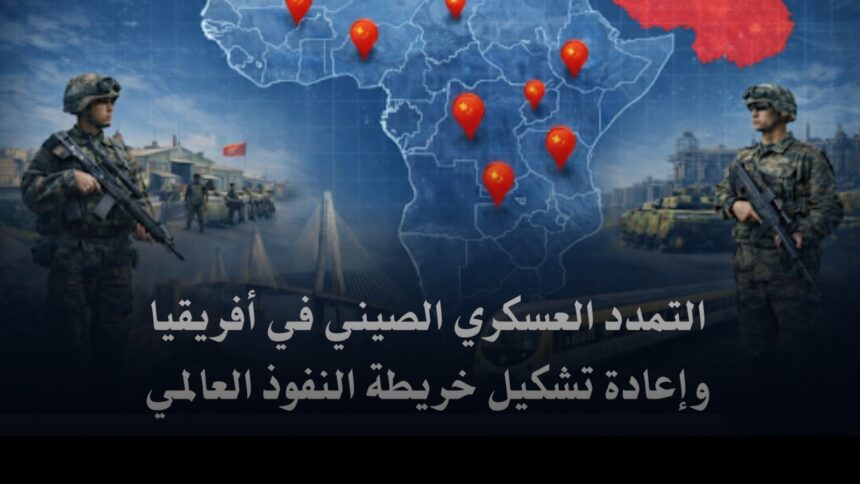
China continues to strengthen its military presence on the African continent, taking advantage of the relative decline in Western interest in the continent, its vast natural resources, strategic location, and growing population, making it a major arena of competition between major international powers. Chinese-African relations have transformed from economic and development partnerships to multi-faceted military partnerships that include joint military training, sending trainers and experts, providing assistance in the fields of defense and security, participating in peacekeeping operations, supplying small and medium weapons, leading to the establishment of permanent logistical bases.
Strategic context and drivers
The Chinese move comes in the context of profound transformations in the international system after the end of the Cold War, as American hegemony imposed on China the necessity of finding a foothold in strategic areas outside its regional surroundings, to achieve a balance of power and confront any Western attempts that might hinder its economic rise. In its dealings with African countries, China relied on a model different from the Western model based on political and economic conditionality, as Beijing focused on the five principles of peaceful coexistence, which include mutual respect for sovereignty, territorial integrity, non-aggression, non-interference in internal affairs, equality and mutual benefit.
Although these principles appear to support sovereignty and development, they are considered an effective strategic tool that has enabled China to bypass traditional Western diplomacy, which has given it wide acceptance among African ruling elites, especially in countries facing Western pressures related to good governance and human rights. They have contributed to strengthening its position among the major powers and displacing traditional French and British influence.
Chinese tools of influence
- Peacekeeping operations: Chinese peacekeeping forces have become an essential part of the military presence in Africa, as Beijing participates as the second largest financier of UN peace operations and provides the largest number of human personnel among the permanent members of the Security Council. About 2,000 Chinese peacekeepers are currently working in Africa. This presence aims to protect Chinese economic interests and ensure the stability of investment areas. It also enhances China's image as a responsible power on the international scene and supports its position in international forums, including the Taiwan issue.
- Arms sales and technology transfer: China has expanded to become the largest arms supplier in sub-Saharan Africa, with at least 21 countries receiving arms shipments from Beijing between 2019 and 2023, while about 70% of African armies rely on Chinese-made armored vehicles. Military cooperation also includes joint training, military education and exchange of experiences, as the Chinese armed forces have conducted 19 military exercises, 44 visits to sea ports and 276 high-level defense exchanges since 2000, with a focus on transferring Chinese technology to modernize African armies and reduce their dependence on Western arsenals.
- Security and counter-terrorism training: China uses security cooperation and training as a soft tool to increase its military influence in African institutions. In 2023, it held the third edition of the “China-Africa Peace and Security Forum” with the participation of military leaders from 50 countries, with a focus on the Chinese Global Security Initiative and supporting the capabilities of African countries in confronting terrorism, piracy, and organized crime. The initiatives included organizing training courses for African officers in Chinese academies and providing capacity-building programs in intelligence, border control, and crisis management. Beijing also supported counter-terrorism programs in the Sahel and the Horn of Africa, while providing technical and logistical assistance to develop the security services in Nigeria, Kenya, and Ethiopia.
- Building military bases: China has a permanent base in Djibouti, which represents its first permanent military presence outside its territory. The base serves peacekeeping missions, military training, protecting Chinese citizens abroad and carrying out emergency rescue operations, in addition to securing vital sea lanes. China is also working to strengthen trade ties between Djibouti and Ethiopia, and American reports have indicated that Beijing is intending to establish a second base in Equatorial Guinea to strengthen its presence in West Africa.
Geopolitical implications
- Chinese expansionism has raised American fears of growing influence in the Atlantic coast and East Africa, forcing a reassessment of the military strategies of American forces and their allies.
- The decline of traditional Western influence, especially France, in Francophone Africa has helped strengthen Chinese influence through grants, arms supplies, and military training, reflecting a far-reaching geopolitical shift.
- Africa has become an arena of proxy conflict between major powers, with the entry of new actors such as Turkey, the UAE, and Iran, which increases the complexity of the scene and turns the regions of the Horn of Africa, the Sahel, and the west of the continent into open theaters for the intersection of regional and international interests.
Future challenges
The Chinese-African military partnership faces challenges that include African countries’ fears of indirect military dependency, Western criticism of employing military cooperation to enhance geopolitical influence, in addition to the weakness of African security institutions, which may reduce the effectiveness of cooperation. The stagnation of Belt and Road projects or the worsening debts of African countries may also lead to the loss of the attractiveness of the Chinese model.
China considers its military presence in Africa an integrated strategy aimed at protecting its huge economic interests, balancing American hegemony, and securing its investments within the Belt and Road Initiative. This expansion depends on a combination of hard and soft power, including international peacekeeping, arms sales, military training, and building military bases, which enhances Beijing's position as a comprehensive security partner. These moves place Africa at the heart of competition between major powers, with continued risks threatening the sovereignty of African countries if the continent turns into an open arena of conflict. China’s success remains linked to its ability to maintain its economic and political stability and avoid turning military influence into a factor of regional and geopolitical tension.