
Shaima Hassan Ali
A researcher specializing in African affairs
In Africa, peace agreements do not last, nor do arrangements for sharing power and wealth, whether between civilians and the military, or even between tribes and ethnicities that control one territorial area, that is, within one state. In Sudan, whether north or south, there is no voice that rises above weapons and rebellion. The Sudanese citizen was unable to catch his breath after a history of civil war between his north and south. This hateful war soon ended with thousands of dead and wounded, but also with the separation of the south from the north. The world adopted the most recent country to enjoy international recognition and membership in international forums, and matters had stabilized, except that a civil war broke out between the president and his vice president, or you could say between the different ethnicities and tribes (Dinka, Nuer), which participate in forming the social fabric of the modern state. The 2015 peace agreements, not even the 2018 agreement, did not last, and the matter became more complicated, with the delay of the elections that were scheduled to be held in December 2024, and the disputes over the succession. “Salva Kiir” amid reports of his deteriorating health, and a dispute over the division of electoral districts, and oil revenues, and while the “Kir” regime accuses the opposition of being rebels, and even arrested his former deputy, “Riek Machar,” on charges of “murder, treason, and committing crimes against humanity,” the opposition leader describes “Kir” as representing “the rule of one tribe.” In any case, clashes have renewed between the ruling regime and the opposition factions, and in this context, the army commander granted Paul Nang Majok gave his soldiers a 7-day deadline to eliminate the rebellion, according to the BBC newspaper. This paper discusses the causes and repercussions of renewed fighting in South Sudan, as follows:
First: the recent practices of the “Salva Kiir” regime and the renewed fighting
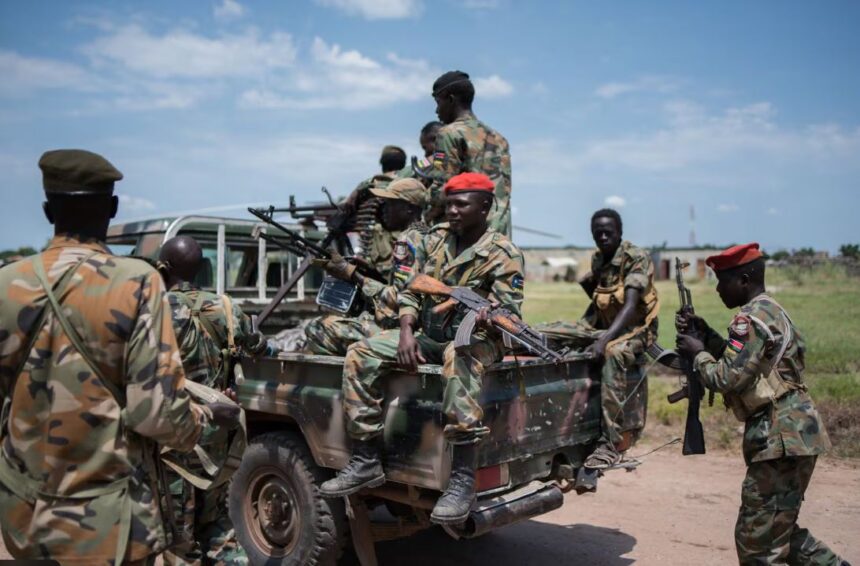
Amid a wave of news circulated by some newspapers, which promoted the nature of President Salva Kiir’s health condition, and in light of the emergence of Paul Mill as one of the figures close to the president, fighting renewed in the eastern state of Upper Nile, which the opposition factions of the Sudan Liberation Movement-Opposition threatened to reach the capital, Juba, and launch an attack on it, hoping that these movements would represent a pressure card on the regime to release the opposition leader, Riek Machar, and make reforms in The political process, and taking steps to move forward with reforming the security sector, but the opposition’s demands seem far-fetched, especially since the threats of the army commander, Pol Nang Majok, vowed to eliminate the armed rebellion and end it in 7 days.
The state of “South Sudan” appears to be in an unenviable situation. The modern state, which enjoys enormous oil resources, suffers from problems of poverty, declining economic development, and weak financial resources, especially with the flare-up of the situation in Northern Sudan, and the targeting of the oil lines linking it to the port of “Port Sudan,” and with the complexity of grants, the decline of foreign investments, and the cessation of humanitarian relief programs that were provided by the “US Agency for International Development.” Juba faces the threat of famine, poverty, unemployment, and violence, while The specter of renewed civil war looms once again, and in fact, the recent practices of the ruling regime have left the armed opposition with no other option but confrontation, as President Salva Kiir deliberately consolidated his rule and disavowed all provisions of the peace agreements he signed with his deputy and opposition leader Riek Machar. Rather, he rushed to arrest the latter and try him before a local court, which violates the terms of the 2018 agreement. He also rushed to implement a purge campaign of the officials whom Machar appointed to power, and replace them. With figures loyal to him, this included all the security and military services and sovereign ministries, and among these figures was the head of the intelligence services, General Akol Kore Koch, a figure who had been appointed by Machar before that. Salva Kiir also disavowed his commitment to holding the elections twice and postponed them to December 2026. The opposition claims that the arrest of Machar and the dismissal of his wife, Interior Minister Angelina Teny, are among the measures taken by Kiir to prevent Machar from running. Elections end this year.
Second: The demands of the armed opposition and the march towards the capital
في الواقع تطالب المعارضة المسلحة بتنفيذ بنود اتفاق السلام يونيو 2018، خاصة المطالب التي تقر بإعادة تقاسم السلطة والثروة بين النظام والمعارضة وبين قبائل “الدينكا” الحاكمة و”النوير” المعارضة، وهي النخب التي يطلق عليها “النخب النيلية” التي ظلت محتفظة بالسيطرة على الحكم والمعارضة أيضًا، وهذا لا يمنع قيام التحالفات بين الإثنيات الكبيرة والقبائل الصغيرة، في إطار الدعم والاصطفاف ما بين الطرفين، خاصة إذا علمنا أن “دولة جنوب السودان” تضم بحسب بعض التقديرات 90 إثنية ومجتمعًا محليًا، وعلى غرار الدول الإفريقية تتصاعد النزاعات على الأراضي والموارد خاصة “النفطية منها”، وأبرز مثال على هذا هو النزاع على مدينة “موكال” وهي المدينة التي تزعم إثنية “الشيلوك” أحقيتها في ملكيتها وتطالب بتعديل الحدود الإدارية لها، وضمها ضمن الدوائر الانتخابية التي تسيطر عليها، خاصة وأن النظام قد ضمها لمناطق سيطرة إحدى قبائل “الدينكا” والتي تنتمي لنفس إثنية الرئيس “سيلفا كير”، ما جعل شباب إثنية “الشيلوك” ضمن الجماعات المعارضة بقيادة “مشار”، وعلى نفس المنوال تطالب المعارضة بإعادة توزيع الموارد النفطية وعائداتها بشكل عادل لتستفيد المجتمعات المحلية التي يتم استخراج هذا النفط من أراضيها، حيث تشتكي هذه المجتمعات من مركزية السلطة والحكم والسيطرة على الجزء الأكبر من العائدات مقابل تهميش المجتمعات الأصلية، كما تطالب المعارضة بإعادة كتابة دستور جديد، بل والتخلص من حكم “القبيلة الواحدة” كما يصفها “رياك مشار”، وفي ظل هذه الأحداث فقد أعلنت فصائل المعارضة في ولاية “جونقلي” شن هجوم على بلدة “بور” والتي تبتعد بمقدار ساعتين عن العاصمة “جوبا”، بل إنها قد وجهت تحذيرات للسكان في هذه المدينة بضرورة إخلاء منازلهم، وبحسب القائم بأعمال رئيس أركان الجيش الشعبي لتحرير السودان – المعارضة، الفريق “بيتر ثوك تشول لواك”، تحذيرًا لسكان “جوبا”، قائلًا إن قواته ستشن هجمات بالقرب من المدينة.
Third: Map of regional supporters
The map of regional supporters in the South Sudanese conflict is complicated. Traditionally, the countries of Uganda - which have participated with the presence of Ugandan soldiers since last November to protect Kiir's government - Tanzania, Ethiopia and Kenya are among the most prominent supporters of the ruling regime led by Salva Kiir. Next to these forces is the United Arab Emirates, while the government of North Sudan supports the opposition factions led by Riek Machar. In fact, some observers, especially in international crisis groups, have warned of the complexity of the conflict environment if Other forces intervened to support the opposition factions, and here we can refer to “Saudi Arabia and Egypt.” Therefore, some specialists commented on the necessity of regional pressure on the Kiir regime to move forward with the implementation of the 2018 peace agreement, but the arrangements made by Kiir did not succeed in healing the rift with the opposition, as the latter played on the contradictions and differences between the opposition factions in an attempt to weaken his opponent, Machar, but it seems that these attempts did not achieve what was desired.
In fact, the June 2018 peace agreement caused a split in the alliance of “Riek Machar” and within the “Sudan People’s Liberation Front - Opposition”, between factions affiliated with the Nuer tribes led by “Simon Gatwick”, which opposed this agreement, considering that “Machar” had favored his interests and achieved gains at the expense of the rights of the opposition, and the factions of the “Shylock” tribes led by “Jovon Olony” by enticing them to integrate into the army forces and offering them material privileges. Morally, Machar was able to control his alliances in light of Salva Kiir’s rule alone and his renunciation of his pledges to the opposition factions, and in light of his efforts to secure his political succession towards Paul Mill, who does not enjoy the support of figures in the regime itself.
The reality is also that the situation of the security and military sector is very deteriorating, as these sectors suffer from weak resources, training and armament, and the absence of a social welfare system, so that many soldiers complain about not paying their salaries regardless of their financial scarcity. The reality is also that the lack of resources and funding is an important reason for “Salva Kiir” not fulfilling his pledges. This situation has prompted many soldiers to engage in other regional conflicts such as the war in Sudan, where there were reports of some fighters joining the conflicting parties in Sudan (Support In any case, the opposition appears to be in an influential position, especially after its threats to attack the capital, Juba, and the regime itself does not seem to have backed down, which ultimately means a complication of the conflict and a return to a state of civil war. The matter could become darker if South Sudan becomes another arena for settling scores between regional powers competing for influence and resources in the Horn of Africa.