
Written by: Shaima Hassan Ali, PhD researcher at the Faculty of Graduate African Studies at Cairo University
Many Sahel countries have taken decisions to impose a ban on scooters. This ban varied between banning the trade of certain types of “large-sized bikes,” or limiting their use at certain times, or banning them in specific areas, as well as taking steps to reduce the volume of this trade. In the Sahel countries, motorcycles are considered one of the cheapest and easiest means of transportation, and they are considered the main pillar of the economies of these countries. This analysis discusses the importance of motorcycles, and the reasons why the Sahel countries seek to ban them and impose fees to reduce their trade, as follows:
First: The economic and social importance of motorcycles in the Sahel countries
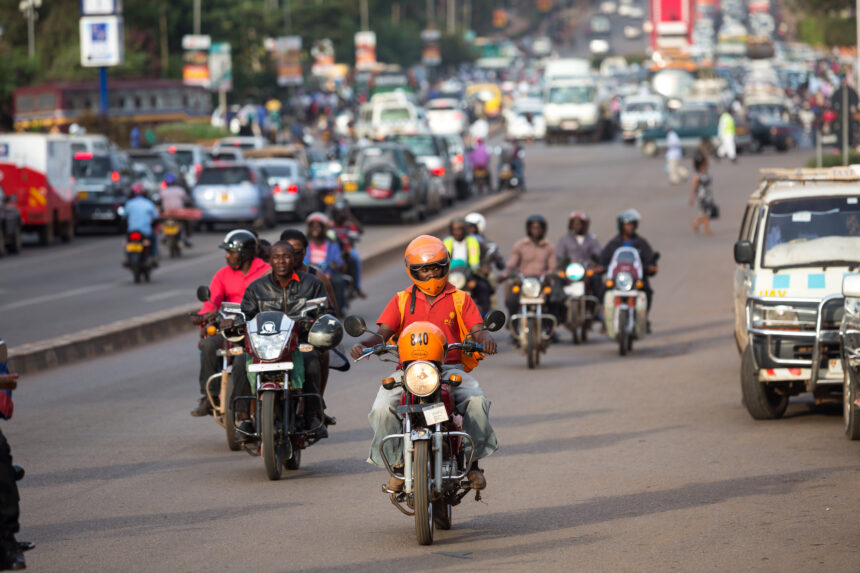
Given the nature of economic activity and social life that characterize the African Sahel countries, which depend mainly on agriculture, pastoralism and fishing, and in line with the fact that the Sahel countries lack infrastructure and paved roads, motorcycles are considered an essential means of transportation in both urban and rural areas of the Sahel countries, especially Mali, Niger and Burkina Faso, where they are a mainstay of many local economies.
This is because they represent the cheapest, and usually the most reliable, means of transportation for citizens who cannot or do not want to rely on public transportation, or cannot afford a car. They have often replaced donkey carts, camels or bicycles as a means of transportation, and have become a staple of commercial and family life in the Sahel. In addition, it has advantages such as its suitability for unpaved, rough or sandy roads compared to most cars. They are also more fuel efficient and easier to repair, making them a must-have in rural areas. Some types of heavy or large motorcycles have become the most popular means of transportation for farmers and herders in Burkina Faso and central Mali, due to their ability to negotiate poor roads or sandy surfaces.
Second: Security and institutional challenges in the Sahel countries
The African Sahel region suffers from the phenomenon of state fragility, which in turn has affected the security situation and the achievement of economic development. The reality of the Sahel countries in international indicators places them among the countries most affected by terrorism, due to their transformation into hotbeds of global terrorism and a center for organized crime, as a result of the spread of terrorist organizations affiliated with Al-Qaeda and ISIS.
The Sahel region is characterized by low average income, with approximately 31% of the population living below the international poverty line. The majority of African Sahel countries, especially Mali, Niger and Burkina Faso, are classified as “high fragility”, as Burkina Faso and Mali are among the most fragile countries in the world as a result of the escalation of armed violence and the recurrence of political coups.
Regarding the Corruption Perceptions Index, the Sahel countries recorded the lowest rates globally, as Mali ranked 135 out of 180 countries, Niger ranked 107, while Burkina Faso ranked 82.
According to the Africa Organized Crime Index, which reveals the extent of the challenges associated with the spread of smuggling activities and organized crime in the Sahel region, the average crime rate on the continent is 5.25 points out of 10. According to the index, the Sahel countries fall into the category that records high rates of organized crime, in exchange for low levels of “resilience,” which reflects weak institutional, security, supervisory, and judicial capabilities in confronting this phenomenon.
For example, Burkina Faso scored 5.83 points for “Criminal Markets” and 6 points for “Criminal Entities,” while its score for “Resilience” did not exceed 3.46 points, which reflects its limited ability to confront the challenges associated with organized crime. The scale of the criminal market in the Sahel countries reveals the breadth of illicit trade, of which motorcycles are a large part. As Burkina Faso, Mali and Niger are landlocked countries, high prices are a hallmark of the landlocked Sahel countries, which has led to the emergence of numerous smuggling routes and well-known hubs for purchasing illicit goods, specializing in the motorcycle trade.
In the same context, the Sahel region is the region most affected by terrorism in the world, as in 2024 it accounted for more than half of the deaths resulting from terrorist operations, in addition to 19% of the total attacks globally.
Third: Motorcycles as a destabilizing factor in the Sahel region
Despite their central place in domestic and economic life, motorcycles are also a flashpoint of tension in the insecure Sahel region. The importance of motorcycles in everyday life means they are in constant high demand, making them a desirable target for thieves. Motorcycle theft in the Sahel region is often violent in nature, with severe economic consequences for citizens. The loss of a motorcycle can also severely damage a family's ability to withstand other shocks, especially in a region experiencing increasing instability and suffering the effects of conflict.
Naturally, motorcycles have become an indispensable weapon for terrorist organizations, and propaganda images for the two main violent extremist groups in the Sahel, JNIM and ISIS in the Sahel, often show them riding motorcycles or aboard armed pickup trucks. In turn, Sahel authorities frequently issue press releases when large quantities of motorcycles are confiscated, portraying these seizures as successful counterinsurgency efforts. The question is: How did terrorist organizations develop their tactics using motorcycles?
1 Contributing to killing operations, as the killings of more than 100 civilians were committed by ISIS in the Sahel region in January 2021 in the villages of Choma Bango and Zaroumadary in the Olam District of Niger, by terrorists who arrived on a hundred motorcycles. This link between armed groups and motorcycles has become so strong in the Sahel that a family that loses its motorcycle to theft is often suspected of collusion with armed groups. Bicycles from Chinese brands such as Aloba, Boxer, and Sanili are common types, and they are the same brands that the “Group for the Support of Islam and Muslims” relies on, which Burkina Faso has banned.
2 Motorcycles are an integral part of the criminal economy in the Sahel and are probably one of the most widely trafficked commodities in the region. Some reports indicate that between 40 and 50% of bicycles arriving at the ports of Nigeria, Benin and Togo are smuggled and are not organized into the official supply chain, as bicycles are smuggled and hidden inside other goods and merchandise.
Government response to motorcycle challenges
The Sahel countries tried to impose a ban on scooters, and this ban varied to include a temporal, spatial, and qualitative scope, as well as increasing the imposition of taxes on the import of this type of consumer goods. Mali, Burkina Faso, Niger, and more recently Benin have sought to implement a range of measures to ban motorcycles, such as limiting the types of bikes that can be used in a given area, setting driving hours, and/or banning the sale or import of motorcycles.
According to data collected by the Global Initiative Against Transnational Organized Crime (GI-TOC), such prohibitions have been applied throughout the Sahel since 2012, the year the conflict began in Mali. Regional authorities often issue bans on motorcycles with the aim of helping security forces distinguish between armed groups and civilians. Because civilians are presumed to comply with the ban, violating motorcyclists could be targeted for ground or air strikes. In practice, these prohibitions have had only limited success, and in some cases have had disastrous consequences. The measures taken by the countries were as follows:
Burkina Faso: It imposed a night-time ban on the use of motorcycles in the eastern provinces affected by the conflict, and a ban on the sale and import of some brands of motorcycles.
Mali: Banned the use of motorcycles in specific areas, with a focus on large motorcycles.
Niger: Various bans on the use of motorcycles in certain regions, although some bans have been lifted and re-imposed.
Benin: Recently imposed a temporary ban on the use of motorcycles in some municipalities in the northwest to curb extremist activity.
On the other hand, prohibiting the trade in motorcycles or their use was not an effective means. On the one hand, the state prohibits them, and on the other hand, terrorist groups and armed organizations tempt young people to acquire them if they accept recruitment, which is what actually happened in the “Diffa” region in Niger, where the “Boko Haram group” sought to give advantages to the targeted youth to join it. In fact, the idea of banning this type of transportation, which is a fundamental pillar on which the economies of local communities depend, is an inaccurate move. In addition, assuming that civilians adhere to this ban poses significant challenges to the simple farmer's access to livelihood. On the third hand, tensions between local communities and police pose another challenge if they do not adhere to implementing the ban. Here, it can be recalled that the beginning of the outbreak of tensions between members of the followers of Muhammad Yusuf, the spiritual leader of Boko Haram, and the police forces broke out when Nigeria implemented the requirement to wear a helmet when driving motorcycles, in early 2002, that is, before the outbreak of the full rebellion in 2009.
In conclusion, it is necessary to adopt policies that are more flexible than a comprehensive ban on motorcycles, by regulating their use rather than restricting them completely, while strengthening customs control and combating smuggling, providing economic alternatives for young people, and implementing the ban selectively and temporarily in conflict areas, in addition to building confidence between local communities and security services, strengthening security and judicial capabilities, and encouraging regional cooperation to reduce bicycle smuggling and its role in the activities of armed groups.