

Written by the researcher specializing in African affairs.. Shaima Hassan Ali
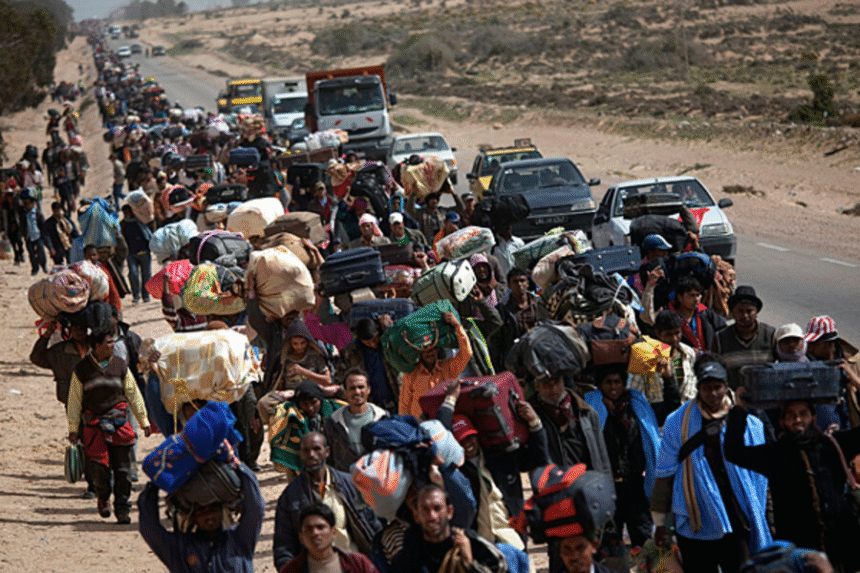
As soon as the talk about the idea of displacing the Palestinians dies down, it is renewed again around the same project, either because of Israeli statements, or American projects (Middle East Riviera, New Gaza), or movements that raise suspicion and suspicion. In fact, they are legitimate questions about the central and crucial issue of the Arab and Islamic peoples, especially if we take into account that the essence of the establishment and continuation of the Zionist project is that Palestine is a land without a people, and therefore it must be given to a people without a land. In the first, he means the land of the Arabs. The second means the Jewish people, but this paper does not discuss the essence of the Arab-Israeli conflict, nor even displacement projects, as much as it raises legitimate questions about some suspicious moves regarding the status of the state of Libya, and its role in receiving the “Syrian Palestinians,” especially since it, as a state, has been hinted by the head of the Zionist entity, “Netanyahu,” about the possibility of receiving the Palestinians. These statements came in light of a meeting between Libyan Foreign Minister Najla Mangoush and her Israeli counterpart, which sparked a great wave of anger over the possibility of normalization between the two sides, and this later caused her to leave the position.
On the other hand, there are some steps being taken by the internationally recognized government in western Libya, regarding security facilities and approvals made through some bodies, which provide an opportunity for Palestinians in Syria or even in the Gaza Strip to travel to Libya, and the situation becomes more suspicious when we add to this scene the presence of some figures affiliated with the Islamic movement to legitimize and obligate receiving Palestinians, at a time when the European Union sets a new law for the possibility of receiving “Syrian Palestinians” and some Syrian minorities such as “Druze.” and Alawites,” and limits reception of Sunni Arabs under the pretext that Syria has become safer for them today after the fall of the regime.
In any case, this paper poses a question: Can Tripoli become a destination for Palestinians, especially those who have sought refuge in Syria since 1948? This is as follows:
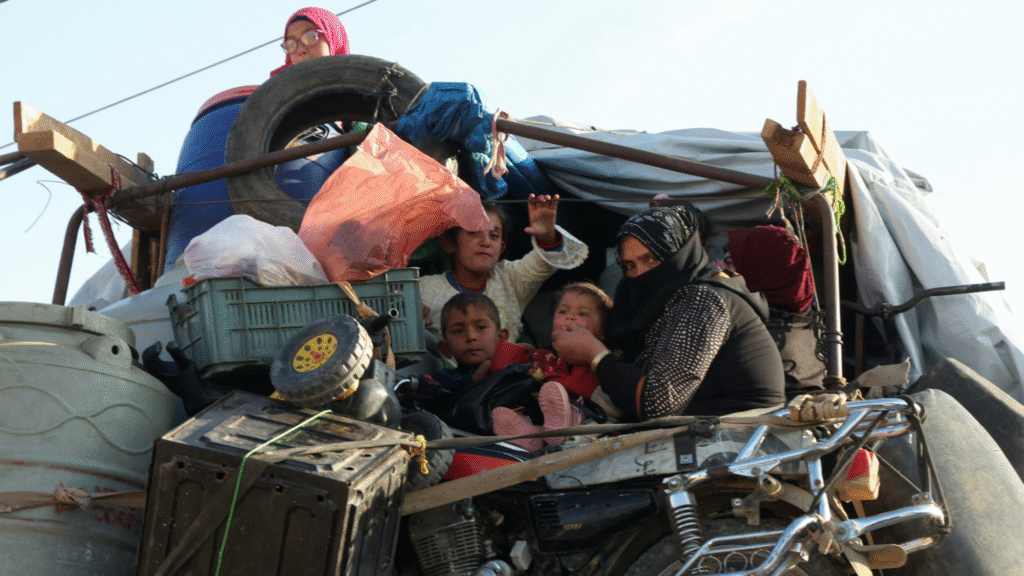
First: The nature of the Palestinian presence in SyriaFirst: The nature of the Palestinian presence in Syria
Before the outbreak of war in Syria, the number of Palestinians who left for Syria was estimated at about 600 people. The Palestinian migrations came after the Arab and Israeli wars. According to journalist Ali Badwan, the Palestinian refugees who entered Syrian territory between 1948 and 1956 are the largest category of Palestinian refugees in Syria. Their affairs are supervised by the General Authority for Palestinian Arab Refugees.
There is the second category, which represents those who entered Syria after the issuance of the decree equating Palestinians with Syrians, that is, after 1956. These people were registered according to the restrictions of the General Authority for Refugees and the restrictions of “UNRWA,” and what applies to those affiliated with the first category applies to them, except that they cannot enter the labor market except through a temporary contract, and they are not subject to compulsory service in the army.
There are those who entered Syria after 1967 and are treated as the group previously mentioned. The last group is for those who entered Syria after 1970, most of whom lack identification papers, and those who early joined the ranks of the Palestinian resistance after the June 1967 war, and left their first homes in the Gaza Strip and West Bank camps, and moved to Jordan, and from there to Syria, and the vast majority of them do not have documents, and they do not benefit from UNRWA services; Because they are not registered in its regulations.
In any case, the Palestinian blocs are concentrated in 12 official camps and 9 unofficial ones. These camps are located in the capital, Damascus, its countryside, Aleppo, Homs, Hama, and Latakia. Yarmouk camp is considered one of the most prominent camps that includes Syrian Palestinians.
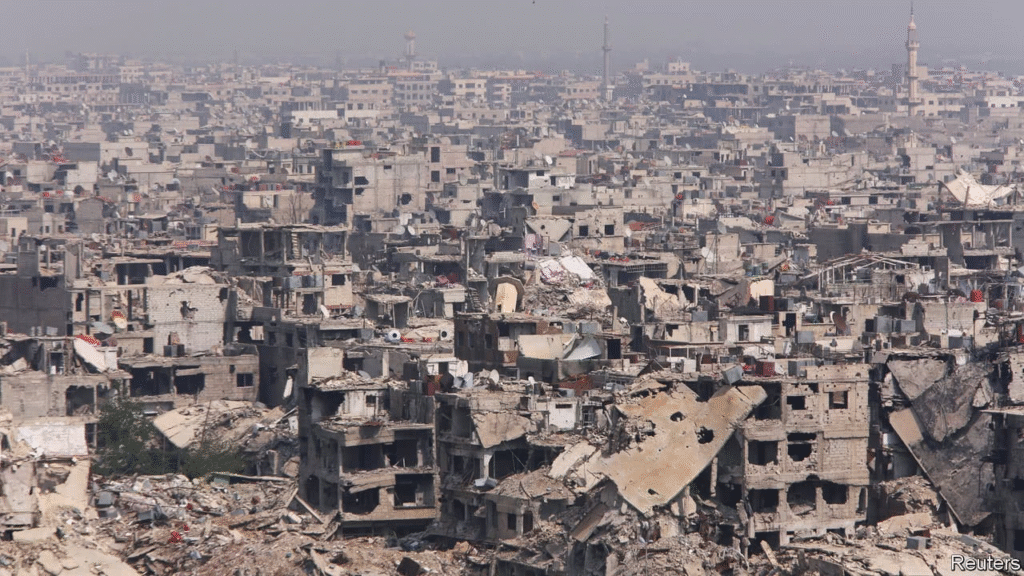
After the outbreak of the civil war in Syria in 2021, these Palestinians were divided. Some of them were subjected to killing, displacement, and asylum, some of them were arrested in the regime’s prisons, some of them left Syria, whether legally or illegally, and some of them joined the fighting, whether on the side of the regime or on the side of the armed opposition forces, or even in the ranks of “ISIS” and “Al-Nusra Front.”
In any case, Israel does not view with satisfaction the presence of Palestinians in Syria, especially since these camps also embrace the Palestinian resistance and its weapons. Therefore, we see that among the demands that “Washington” and “Israel” seek to implement is the disarmament of the resistance, whether this is in Gaza, Lebanon, or even in the refugee camps in Syria.
Among the steps that undermine the presence of Syrian Palestinians is the abolition of UNRWA and the drying up of its financial sources. This trend includes the agency’s branches in the areas in which it operates. What makes the matter even more suspicious is the recent European Union decision, as part of its risk assessment policy in Syria, to automatically grant Palestinians coming from Syria refugee status within the categories of minorities that were recently allowed to be received, such as (Alawites, Druze, and Christians).
Second: The fall of the Syrian regime and relations with the unity government “Tripoli”
On December 28 of last year, about 20 days after the fall of the Syrian regime, a delegation from the National Unity Government visited Syria and met with the new President, Ahmed Al-Sharaa, at the Republican Palace. The Libyan delegation consisted of Walid Al-Lafi, Minister of State for Communication and Political Affairs, Ali Al-Abed, Minister of Labor, Mahmoud Hamza, Director of the Military Intelligence Department, commander of the 444th Brigade, and Ambassador Khalaf Allah Al-Mahdi.
In fact, the timing of the visit and the composition of the accompanying delegation draw attention, and according to the specialist in Libyan affairs, “Osama Al-Shahoumi,” things have not stabilized in the Syrian state, as the visit was only 20 days after entering the capital, a country that has been torn by the war that has been raging since 2013, and is suffering from massive international and regional interventions as well as the spread of terrorist organizations and separatist entities.
According to Al-Shahoumi, the timing raises doubts, and the nature of the negotiating delegation itself is “strange,” especially since the head of the delegation includes “Ali Al-Abed,” the Minister of Labor, the latter of whom owns the “Wafid” system, which is basically accused of being involved in “illegal immigration” issues. Al-Shahoumi believes that this visit was not a mere coincidence, but rather came within a “dangerous secret” project related to “receiving Syrian Palestinians.” He also believes that the project did not become “secret,” especially after it was talked about and presented within the displacement projects promoted by “Israel.”
The specialist in Libyan affairs adds that during the visit, “the issue of activating bilateral relations and specific security issues were discussed, the most important of which were Syrian fighters in Libya. What is surprising is that the delegation touched on the issue of Syrian labor at an early and unstable time.”
The strange thing is that a country like Libya, which suffers from division, fragmentation of institutions, and corruption of officials, attracts workers from Syria, which was torn by civil war, terrorism, and foreign interference. The matter becomes more complicated, as we learn that Turkey, led by Erdogan, has brought in Syrian fighters to recruit them into the Libyan civil war and engage them against Haftar’s forces since 2019, and then the latter launched what is known as the “Battle of Dignity” or the “War to Liberate Tripoli” from armed militias. There are many videos documenting the transfer of Syrian fighters to Libya, and their confessions confirm this.
The participation of “Mahmoud Hamza,” the military official of the 444th Brigade, who is responsible for transporting Syrian fighters in what is known as the “Al-Hamzat” organization, the “Sultan Murad” division, and “Al-Amshat,” which is the “Sultan Suleiman Shah division,” adds another dimension to what this visit means.
In fact, Al-Shahoumi believes that these steps aim to change the demographic composition in Libya and bring in Syrian Palestinians under the guise of “bringing Syrian workers,” according to statements by Labor Minister Ali Al-Abed, where he said, “Libya needs hundreds of thousands of Syrian workers to cover the needs of the labor market.”
Third: Suspicious trips and silent resettlement: What is happening between Damascus and Tripoli?
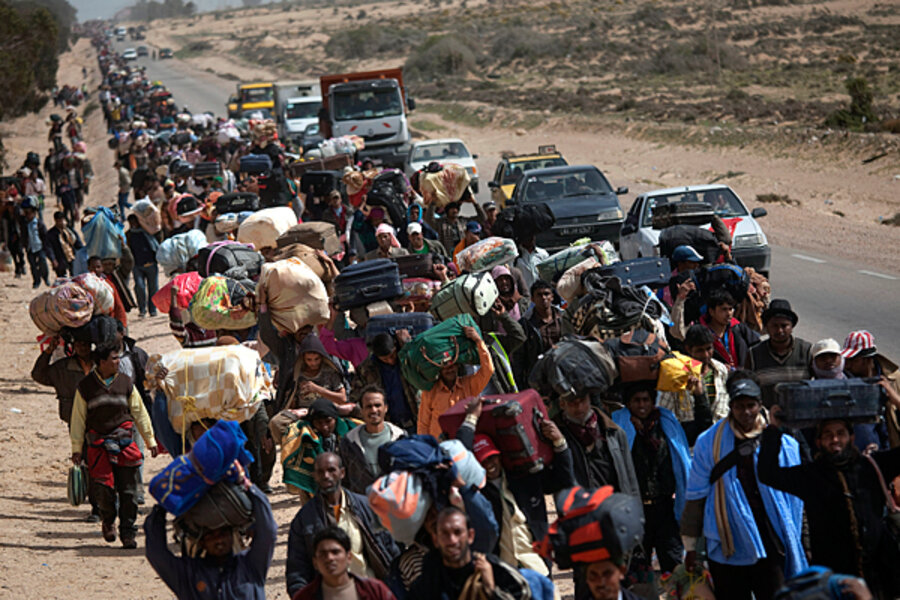
The indicators of the implementation of the “displacement” plan are clear, as the National Unity Government, through its charge d’affaires at the Libyan Embassy in Damascus, Walid Ammar, quickly began granting visas to Syrian-Palestinians. Indeed, visas began to be issued selectively to facilitate the crossing of hundreds, if not thousands, into Libya under the guise of “family reunification” or “humanitarian facilities.” In addition, a direct air line was opened between “Tripoli” and “Damascus” to transport those targeted by this resettlement. African Airlines announced the operation of direct flights between “Misrata” and “Damascus” in a surprising step after the interruption of flights between the two countries for years. According to Osama Al-Shahoumi, all national minds are wondering: Is it reasonable to open direct airlines just for the sake of twelve visas that were granted “routinely”? These are the statements made by the head of the representation at the Libyan embassy in Syria, “Muhammad Mustafa Muhammad al-Kamishi,” to the specialist in Libyan affairs, “Osama al-Shahoumi,” and the latter answered, of course, no.
Al-Shahoumi goes on to say: Opening flights in this way confirms that there is a mass transport movement of people being arranged, and that the real number of those who will be transported to Libya is much greater than what is announced. Muhammad al-Kamishi, one of the officials involved in Damascus, tried to deny the matter, claiming that the number was limited and did not exceed a few individual cases, but the facts belied his claims. How do we explain the restarting of the Misrata-Damascus line so quickly if not to serve the resettlement project? “Al-Shahoumi” believes that “Walid Ammar” and “Al-Kamishi” and their teams are working within a secret communications circle to coordinate the transfer of refugees secretly and in batches, taking advantage of the new air cover, and the goal is one and the same, which is “emptying the Syrian camps of their original people and sending them to Libya without the knowledge of the Libyan people, in a way that constitutes a demographic time bomb inside our country.”
Fourth: Attempts to replace the head of the intelligence service in the National Unity Government
These projects are integrated with the attempts of influential figures to isolate and replace the head of the Libyan Intelligence Service, Hussein Al-Ayeb, who is the person who essentially rejects this project. What also raises suspicion are the names that have been proposed to succeed him in the position. The names proposed either do not have experience in the field of intelligence work at all, and therefore cannot object to implementing this plan. Here, reference can be made to the former Minister of Sports in the unity government, “Abdul Shafi Hussein Muhammad al-Juwaifi,” or to figures affiliated with the Islamic movement, or rather to movements linked to the Muslim Brotherhood, which is classified as a terrorist group in some Arab countries. According to “Africa Intelligence,” among the names raised in this context are “Omar Baghdada,” who is close to Libyan Prime Minister “Al-Dabaiba,” “Abu Ajila Mohammed,” suspected of involvement in the “Lockerbie” incident, and “Mahmoud Rajab,” commander of the “52nd Brigade,” who led the battle against the “Zintan” militia and is close to “Ankara.” Al-Shahoumi believes that despite the allegations of corruption surrounding Hussein Al-Ayeb, the man is considered part of the movement that opposes the idea of displacing Syrian-Palestinians. In any case, information has circulated indicating that the step to dismiss Hussein Al-Ayeb has been postponed, at least for the time being.
In order to complete the episodes of the “Displacement” series, reliance will be placed on one of the most prominent leaders of the Hamas movement, Marwan Al-Ashqar, the latter of whom was released by the Libyan authorities under Turkish pressure. According to “Osama Al-Shahoumi,” “Al-Ashqar” is considered “the dynamo of resettlement for the Syrian Palestinians” in Libya, and circulated data indicate that Marwan Al-Ashqar, a Palestinian, is considered one of the main actors in the Palestinian resettlement file inside Libya. Al-Ashqar was detained by the Deterrence Service, before he was released in 2023 under direct pressure from Mufti Al-Sadiq Al-Gharyani, after he was arrested for leading a cell linked to the Hamas movement that was seized in Libya and later released.
Information indicates that after 2011, he was moving inside Libya with security facilities, using shaded cars and communication devices, and had a private headquarters, with a connection to the Al-Burki Brigade, and carrying a National Guard card linked to Khaled Al-Sharif, the former Undersecretary of the Ministry of Defense and a former member of the Libyan Fighting Group. The data also indicate that there is direct coordination between “Marwan Al-Ashqar” and “Walid Ammar,” Undersecretary of the Ministry of Defense for Border Guard Affairs and Vital Facilities, spokesman for the Tripoli Shura Council, and currently the Chargé d’Affaires of the Libyan Embassy in Damascus, so that Al-Ashqar is in charge of managing companies, financing, and systems, while the other party provides the official cover and administrative path. There are also allegations that the company contracting for the “Wafid” system, affiliated with the Ministry of Labor, and under the supervision of “Ali Al-Abed,” actually belongs to Marwan Al-Ashqar, with fronts of young Libyan men being used for cover purposes.
Fifth: Displacement between legal duty and complicity
In order for these steps to be legitimized, religion must be used to facilitate the transfer of Syrian Palestinians and perhaps Palestinians in Gaza, as the principle is basically agreed upon by the religious movement in Libya, and therefore it is not strange that the Mufti of Libya, “Sadiq Al-Gharyani,” is leading these calls to welcome the Palestinian Brotherhood to Libyan lands. In fact, the call appears on its face to be “noble.” Who refuses to receive displaced Palestinians and refugees, whoever they are, and who refrains from serving his brothers? But facilitating these steps at a time when the Palestinian cause is facing the danger of being “lost,” and its people are being exposed to conspiracies of forced and soft displacement, and in light of projects being proposed by “Rivera Middle East,” is considered a conspiracy against the people who have suffered scourges, killing, and displacement since the Nakba in May 1948 until now after the crime of genocide committed by Israeli forces. Marketing to open the door to receiving Palestinians, whether from Gaza, Syria, or any other country, under the pretext of needing labor, is not in the interest of the central cause of the Arabs, nor is it in the interest of the Palestinians themselves. Rather, the beneficiary of these projects is the Zionist enemy and the wealthy people of Washington.
On the other hand, the specialist in Libyan affairs, Al-Shahoumi, refers to the ideology that drives the trend controlling the National Unity Government, which is an “Islamic” trend that does not recognize national borders, and does not basically recognize the state as an entity, but rather considers the Islamic nation and Islamic lands. Therefore, he has no problem with a non-Libyan assuming power, perhaps an Afghan, Syrian, or even Palestinian, as long as he is a “Muslim.” This is the ideology that drives this movement, which fundamentally clashes with the model of the national state, even if the notions of establishing an “Islamic caliphate” fade away due to the weakness and setbacks of the Islamic movement, but this concept remains dominant. Therefore, we see that specialists who study this trend always direct that the Islamic movement must undertake a comprehensive review of its approach, goals, and strategy to be compatible with the situation it faces.
In general, what is being proposed regarding the displacement of Palestinians, especially Syrian Palestinians, cannot be considered merely passing ideas or statements. Rather, it has turned into a practical path surrounded by worrying political and security indicators, in which international and regional projects intersect with internal movements in Libya, especially in the western regions of the country subject to the National Unity Government. The data show that Libya is presented, explicitly or implicitly, as one of the alternative destinations to accommodate the displaced Palestinians, in a context consistent with the Israeli vision aimed at emptying the Palestinian land and its surroundings of its indigenous population. The paper shows that the timing of the Libyan movements towards Syria, the nature of the official delegations, the issues of work, employment and security, in addition to granting visas and opening direct air routes, are all elements that cannot be separated from a silent resettlement project that is managed away from popular and institutional oversight. It also highlights the dangers of using the humanitarian and religious dimension to justify these policies, at a time when the Palestinian cause is threatened with liquidation through soft displacement, and Libya itself faces political and security fragility that makes it unable to bear serious demographic repercussions.