
Shaima Hassan Ali
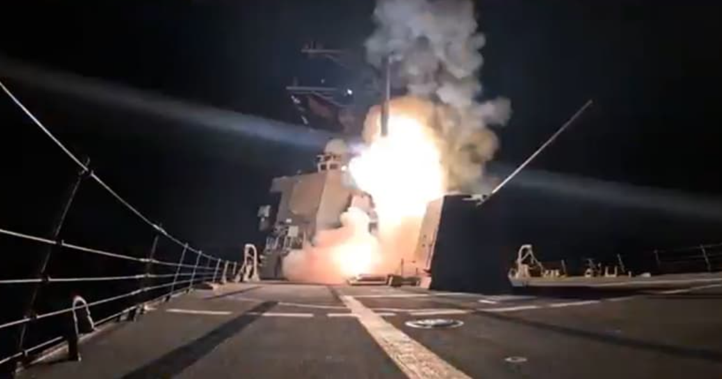
On the eve of Christmas, December 25, for the evangelical Christian community, the US Africa Command (AFRICOM) announced the launch of military strikes through the US Air Force. This was followed by President Trump praising the effectiveness of the strikes, justifying this with claims of “protecting Christians,” and in response to terrorists targeting Christians in Nigeria, accusing the Nigerian authorities of failing to confront the “massacres” occurring against Christians at the hands of ISIS terrorists.
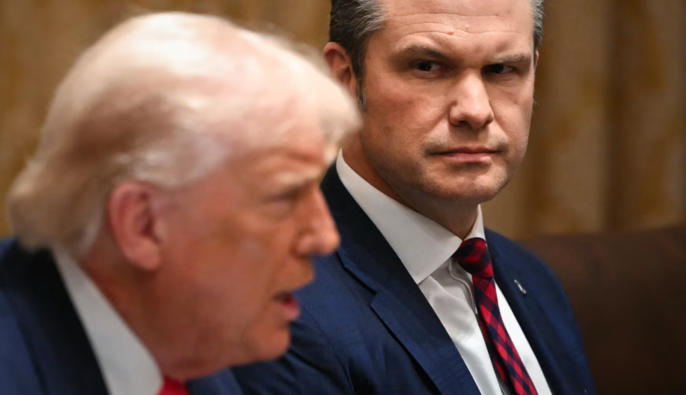
In this context, US Secretary of Defense Pete Hegseth affirmed Trump’s position that the killing of innocent Christians in Nigeria must be put to an end, stressing that his department is “always on alert,” expressing his gratitude for the support and cooperation of the Nigerian government.
For its part, the Nigerian government rejected these allegations, stressing that terrorism in Nigeria targets Christians and Muslims. Regarding the strikes, the Nigerian Foreign Ministry published a statement acknowledging that the strikes had occurred in places where terrorists were based, stressing security and intelligence cooperation.
This analysis discusses the US strikes on sites in Nigeria as follows:
First: The scope of US strikes in Nigeria
The American strikes came on sites in the Nigerian northwest, especially Sokoto State, which is historically known as the center of the Islamic Caliphate, which lasted for many decades, which is the “Uthman Dan Fodio Caliphate,” meaning it has an Islamic majority. However, its location is strategic, as it is considered a border state, and it also contains natural resources, but the state, like the states of the North West, is infested with criminal and bandit gangs. The Nigerian government had declared that these gangs are considered “terrorist organizations,” and therefore the government has the right to target them. Militarily, declaring a state of emergency, drying up its sources of funding, and arresting and prosecuting its members. It can be said that the “Turji” gangs are among the most prominent thieves and criminal groups spread in that region. The most important strategic features that the state enjoys is that it is a large commercial and economic center, and there are no large concentrations of Christians there, rather than some rare presence. The state is located on traditional trade lines, and over time these lines have become the traditional routes for cross-border smuggling movement. Here we mean the smuggling of “weapons, People, drugs, products.
Second: Trump’s threats to Nigeria
Last November, Trump denounced the massacres taking place in Nigeria at the hands of terrorists, and said that the United States “may enter this condemned country now, with all its might, to completely eliminate the Islamic terrorists who are committing these horrific atrocities, and if we attack, it will be fast and severe...just as terrorists attack our dear Christians!” Warning: The Nigerian government must move quickly! Anyone who follows the content of these threats notices the religious tone that surrounds these statements, as he stressed that the terrorists are “Muslims” and that the victims are “Christians.” Indeed, the perpetrators are Muslim terrorists, but the victims are not Christians. Rather, most of the victims of terrorism in Nigeria are Muslims who adhere to the Sunni sect. This does not prevent the targeting of Shiite Muslims and Christians, but according to the data issued by the Global Terrorism Index for 2025, Nigeria ranks sixth in the world as the country most affected by terrorism, and 60% of civilian casualties were due to terrorism by “Boko Haram” and its factions, most notably “West Africa State,” and it is estimated at 3,000-5,000 victims, including those displaced, killed, and injured. As for the Research and Conflict Institute, it has recorded 20,400 civilian deaths since 2020-2025, including 317 cases. It targeted Christians, and 417 Muslims died, while the vast majority had no religious affiliation recorded.
It is known that “Boko Haram” and its factions are mainly based in the northeastern Nigerian states, especially the states of “Borno,” “Yobe,” and “Adamao,” which means that Sunni Muslims are the most affected by the organization and its terrorist factions, especially the factions that regionally control remote areas. What makes the matter even more confusing is the locations of Christians in Nigeria, as they are actually located in the Middle Belt and southern Nigeria. Most of the tensions that occur in the Middle Belt are between “Farmers, Christians, landowners,” and “Muslim herders, settlers.” These are tensions that can resonate greatly throughout Nigeria. The herders are also from the Fulani ethnicity, an ethnicity that is widely accused in West Africa of collaborating with terrorists to rob farmers and steal their lands, livestock, and water. Therefore, Christians are located outside the northwest, and suffer from tensions with the Fulani herdsmen, and suffer from the danger of criminal gangs. They are like the Sunni Muslims in the north, who also suffer from the terrorism of “Boko Haram” and its factions. But the most important question is: What did AFRICOM forces actually target in Sokoto State, Nigeria?
Third: The terrorist “Lacuara” and the Nigerian northwest
It was previously noted that Sokoto State suffers from terrorism by “criminal and bandit gangs.” As for the most prominent organization present there, it is the “Lakowara Group,” which Nigeria classified as a terrorist organization early last year. In short, the emergence of this group represents the most prominent security challenge facing Nigeria. In fact, the group emerged as a self-defense group in the beginning to protect local communities from the terrorism of Fulani groups and criminal gangs, and then it turned into a religious group trying to implement Sharia law, according to its concept, collects taxes, imposes a zakat system, and cooperates with bandits many times. In reality, analysts have not been able to prove Laquara’s links to Al-Qaeda or ISIS, but recently, some estimates have indicated the connection that Laquara could have with ISIS, Sahara Province. In any case, it can be said that the American strikes targeted areas controlled by criminal gangs and the Laquara group.
Third: Timing and its implications
On the other hand, the timing of the strike indicates the content of the message that Trump wanted to send to the American interior first. It is known that the ruler of the White House relies in his electoral base on the religious right, which constitutes about 80% of his supporters. Also, this right has recently promoted allegations made against Christians in Nigeria, and it is known that this right claims a moral responsibility to protect Christians around the world. Therefore, it can be said that Trump embraced these allegations to increase his popularity and gain the sympathy of the religious right from evangelicals, that is, the strategy “Killing two birds with one stone” can be read broadly. On the one hand, the strikes came to deal with an unconventional security threat (the bandit and criminal gangs, the Lacuara group linked to ISIS in the Desert), and on the one hand, Trump exploits this internally to represent a tactic of “escape forward” whenever he faces economic, political, and social problems (the Epstein case, immigration, the faltering economy).
Finally, it is not possible to say with certainty what things will turn out in the next stage, especially since the Nigerian government’s reaction was strange, as it was announced that the strikes were carried out by AFRICOM, and not through the Nigerian capital. The latter also deleted the statement that claimed that the strikes were in coordination with “Abuja”, and after that the Nigerian Foreign Ministry acknowledged the strike, in a statement that was classified by some analysts as “ambiguous”. In any case, “Abuja” appears to be in a difficult position. On the one hand, the government faces many security challenges, A decline in the economy, a successive protest movement, and allegations of coup attempts, while Washington classifies Nigeria as a country of concern due to violations against Christians and a poor human rights record, which increases pressure on the latter and undermines its ability to confront unrest and terrorist threats.