
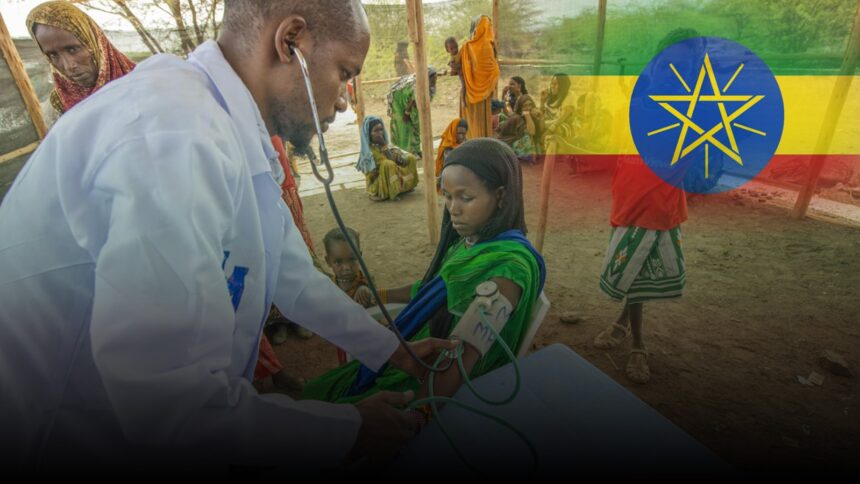
Across Ethiopia, families displaced by natural disasters and climate shocks share shelter with refugees who have fled cross-border conflicts, in a single humanitarian scene united by the search for safety and survival.
The number of internally displaced people in Ethiopia is estimated at more than 4.5 million people, in addition to more than a million refugees who came from neighboring countries, most of whom depend almost entirely on humanitarian aid to meet their basic needs of food, water, and health services.
During the recent period, the country witnessed earthquakes and volcanic activity that led to the displacement of tens of thousands, especially in areas such as Afar, one of the hottest regions in the world, where temperatures exceed 40 degrees Celsius, making clean water and shade a top priority for life. In the Amibara camp alone, more than 18 thousand displaced people live in temporary shelters after the earthquakes destroyed roads and buildings, amid severe weakness in basic services and the spread of risks of malnutrition and diseases.
The European Union, in cooperation with its humanitarian partners, provides emergency assistance to meet the most urgent needs, including health care, food, water, and protection services.
World Vision, with European funding, also provides water trucking, tanks and latrines, as well as education for children and safe spaces for women. Despite the expanding scale of the crisis, the funding gap remains a major challenge, at a time when the numbers of people in need of humanitarian assistance are increasing in one of the most complex crises in the Horn of Africa.